Dickinson Commencement Will Celebrate Class of 2026 and College Community’s Achievements

From left to right: Dickinson President John E. Jones III '77, P'11, Associate Professor of English Sarah Kersh, Class of 2025 President Olivia Abbot-Havers celebrate Kersh's Ganoe Award during 2025 Commencement. Photo by Dan Loh.
Beloved English Professor to Deliver Commencement Address
For the latest information on the Commencement schedule and the livestream, visit www.dickinson.edu/commencement.
Dickinson will celebrate the class of 2026 and other accomplished members of its community during Commencement exercises on Sunday, May 17. Associate Professor of English Sarah Kersh will deliver the Commencement address, and alumni Charlie Craig ’65, P’89, Kevin B. Johnson ’83, John C. Pohl ’78, P’06, and Susan Wyckoff Pohl ’80, P’06, will receive honorary degrees.
Additionally, graduates will be addressed by one of their peers who will be selected by a committee of faculty, staff and members of the class to speak at the ceremony. Commencement will also include the traditional presentation of the Sam Rose ’58 and Julie Walters Prize for Global Environmental Activism, awarded annually to a prominent individual or group dedicated to preserving the planet and its resources. This year, the prize will be awarded to Ayana Elizabeth Johnson, a marine biologist, policy expert, teacher and author of The New York Times bestseller What If We Get it Right?: Visions of Climate Futures.

Sarah Kersh
Associate Professor of English
Commencement Speaker
Sarah Kersh is the most recent recipient of the Constance & Rose Ganoe Memorial Award for Inspirational Teaching. The only student-bestowed teaching accolade at Dickinson, graduating seniors vote on the award each year. “She is seen as an exceptional mentor who combines intelligence with a caring approach, ensuring the personal growth of her students,” Class of 2025 President Olivia Abbott-Havers said when she announced Kersh’s recognition at last year’s Commencement. Abbott-Havers also lauded Kersh’s empathy, interactive teaching methods, and personal investment in her students’ success and wellness.
“My commitment to Dickinson students is powerfully shaped by a dedication to inclusivity and my deep-seated desire to engage in meaningful dialogue across our many differences,” Kersh said. “I strive to create classroom environments in which students explore the unfamiliar and develop new skills, while also learning who they are and what futures they might forge beyond their Dickinson experience.”
The Ganoe Award is the latest in a line of honors for Kersh’s work. In the spring of 2025, she received the OUTstanding Service Award from Dickinson’s LGBTQ+ Center, which is presented to individuals within the college who identify as queer (LGBTQQIA+) and have been actively involved in social justice work to create a more inclusive Dickinson community. In 2023, Kersh received the Joyce A. Bylander Award for Excellence in Diversity Education.
Kersh’s teaching focuses on Victorian literature and culture, queer studies and digital humanities. Her current research focuses on 19th century sonnet sequences and disability studies. She earned a bachelor’s degree from Muhlenberg College and a master’s and Ph.D. in English literature from Vanderbilt University.
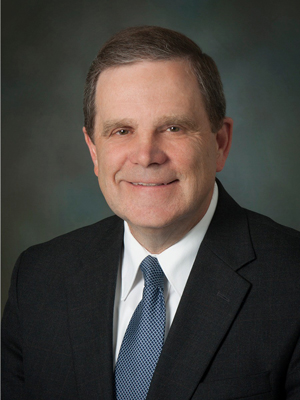
Charlie Craig ’65, P’89
Doctor of Chemistry
Charlie Craig, a retired senior executive with a distinguished 50-year career at renowned glass maker Corning Inc., will receive a Doctor of Chemistry honorary degree. Craig is recognized for his lifelong commitment to scientific innovation, education and philanthropy.
Craig graduated from Dickinson in 1965 with a Bachelor of Science in chemistry. His connection to the college runs deep. A third-generation Dickinsonian, he followed in the footsteps of his parents and a great-aunt. Craig met his wife, Trudy, a Peruvian exchange student, while at Dickinson. In 2020, the college honored him with the Distinguished Alumni Award for Professional Achievement.
Craig’s professional career began in Peru, where he spent five years as a research chemist and supervisor for a major American mining and metals company. He subsequently pursued doctoral studies in chemistry, metallurgy and geology at the University of Minnesota. He then joined the engineering division of Corning Glass Works, now Corning Inc., a global leader in glass, ceramics and optical fiber manufacturing. Over a five-decade tenure, Craig rose through the ranks to become senior vice president for administration and operations in the Science & Technology R&D division, retiring in 2023.
Beyond the corporate sector, Craig has held significant leadership roles in higher education and management. He serves as chair of the American Management Association Board of Trustees and served for 20 years on the Board of Trustees at Clarkson University in Potsdam, New York, where he was named an honorary alumnus in 2023. He also served as a College Council member at Alfred State College of Technology (a SUNY institution), receiving the Presidential Medal in 2023 and an honorary Doctor of Humane Letters in 2025.
A loyal donor to Dickinson for 45 years, Craig and his wife have two children—Suzanne '89 and Robert—and three grandchildren.

Kevin B. Johnson ’83
Doctor of Medicine
Dr. Kevin B. Johnson, an international leader in clinical information technology, will receive a Doctor of Medicine honorary degree. Notably, he served as the first Black chief resident in pediatrics at Johns Hopkins Hospital in Baltimore in 1992. Currently, Johnson is the David L. Cohen University Professor of Biomedical Informatics, Computer and Information Science, Pediatrics, and Science Communication at the University of Pennsylvania. He also serves as vice president of applied informatics for the University of Pennsylvania Health System and leads the Artificial Intelligence for Ambulatory Care Innovation (AI-4-AI) Lab.
His research focuses on clinical information systems that enhance patient safety and medical guideline adherence. He is globally recognized for his work in e-prescribing and computer-based documentation. His current projects explore the integration of artificial intelligence in healthcare, specifically through the REDUCE project (Re-imagining Encounter Documentation Using Computation and Engineering), which utilizes AI to quantify symptoms and improve patient-clinician communication.
Throughout his career, Johnson has authored more than 200 publications and earned election to prestigious organizations, including the National Academy of Medicine, the American College of Medical Informatics and the American Institute of Medical and Biological Engineering. A committed science communicator, he produces documentaries on health technology and hosts the podcast Informatics in the Round. He also co-authored the Who, Me? book series, which features scientists from marginalized backgrounds.
Before joining the University of Pennsylvania, Johnson was the Cornelius Vanderbilt Professor and Chair of Biomedical Informatics at Vanderbilt University School of Medicine. From 2014 to 2019, he served as senior vice president for health information technology at Vanderbilt University Medical Center, where he streamlined administrative systems and developed AI-driven tools to assist with clinical decision-making.
Johnson earned the Hufstader Prize when he graduated from Dickinson in 1983 with a Bachelor of Science with honors in biology. The prize is given annually by Dickinson’s president to two graduating seniors for making the greatest contributions to the good of the college. Johnson has remained an engaged and generous member of the Dickinson community. His service includes membership on the Alumni Council, volunteer work as an admissions interviewer and a key role in establishing the former Bullard Music Studies Support Fund. He earned an M.D. from the Johns Hopkins University School of Medicine and an M.S. from Stanford University.
John C. Pohl ’78, P’06
Doctor of Photography
Susan Wyckoff Pohl ’80, P’06
Doctor of Arctic & Polar Studies

John C. Pohl and Susan Wyckoff Pohl are the founders of the Seattle-based Moraine Foundation, which is focused on helping people live healthy and productive lives through addressing racial inequity, social injustice and climate change.
John C. Pohl, a 1978 Dickinson graduate with degrees in geology and political science, will receive a Doctor of Photography honorary degree. After earning an M.B.A. from Seattle University, John worked in the manufacturing and software field, developing Expert Systems. Later, John merged his scientific background with creative expression through the practice of "geophotography," utilizing the philosophy of Naturgemälde (painting of nature) to capture the interconnected complexity of the natural world with a focus on landscape and large panoramic views. In addition to his work with the Moraine Foundation, John has been active with Dickinson’s Arctic and Alpine studies, the University of Washington’s Discovery in Geosciences and the Smithsonian’s Natural History Museum.
Susan Wyckoff Pohl will receive a Doctor of Arctic & Polar Studies honorary degree. She matriculated with the Dickinson class of 1980 and later earned her B.A. in political science from the University of Washington in 1981. Through her leadership roles with the TEW Foundation and the Norcliffe Foundation, as well as her trusteeship with the National Parks Conservation Association, she has supported efforts to get all generations into wild and public spaces. Susan also served as a member of Dickinson’s Board of Trustees.
Together, the Pohls have transformed the Dickinson experience. Through the Moraine Foundation, in 2009, they established the Endowed Chair in Africana Studies. Now known as the Judith Rogers ’65 and Maureen Newton Hayes ’65 Distinguished Endowed Chair in Africana Studies, it carries the names of the first African American women to integrate Dickinson’s residence halls. The Pohls have also created the Moraine Chair in Arctic Studies and founded the Pohl(ar) Expedition Fund, supporting student-faculty research trips across the Arctic, mapping volcanoes and studying the rapid changes of glaciers and sea ice.
The Pohls are members of the college’s Founders’ Society, Mermaid Society and John Dickinson Society. One of their four children, Gwyneth Pohl Drake '06, is a Dickinson alumna.
Ayana Elizabeth Johnson
2026 Rose-Walters Prize Recipient

Photo by Landon Speers
Ayana Elizabeth Johnson is a marine biologist, policy expert, writer and teacher working to help create the best possible climate future. She is co-founder of Urban Ocean Lab, a think tank for the future of coastal cities, and is the Roux Distinguished Scholar at Bowdoin College. She authored The New York Times bestseller What If We Get it Right?: Visions of Climate Futures, work that is carried on with her newsletter and podcast of the same name.
Previously, she co-edited the climate anthology All We Can Save, co-founded the All We Can Save Project, and co-created and co-hosted the Spotify/Gimlet climate solutions podcast How to Save a Planet. She also co-authored the Blue New Deal, a policy roadmap for addressing climate challenges facing the ocean. As executive director of the nonprofit Waitt Institute, she co-founded the Blue Halo Initiative and led the Caribbean’s first successful island-wide ocean zoning effort. Early in her career, she developed U.S. federal ocean policy at the Environmental Protection Agency and the National Oceanic and Atmospheric Administration.
Johnson earned a Bachelor of Arts from Harvard University in environmental science and public policy and a Ph.D. from Scripps Institution of Oceanography in marine biology. She serves on the board of directors for Patagonia and GreenWave and on the advisory board of Environmental Voter Project. Recent recognitions include the Schneider Award for Outstanding Climate Communication and the TIME Earth Award. Her writing has been published widely, including in The New York Times, WIRED and Rolling Stone.
She is the proud daughter of a teacher/farmer and an architect/potter. Above all: Ayana is in love with climate solutions.
TAKE THE NEXT STEPS
Published May 17, 2026