Healthcare, Medicine & Research Internship Spotlights

From advancing cancer immunotherapy research and exploring the genetics of crop resilience to contributing to vision science and healthcare, Dickinson students spent the summer gaining hands-on experience in laboratories, clinics and research centers around the world.
Kevin Casillas '28
Majors: chemistry, biology and health studies certificate
Internship Site: University of Pennsylvania, Center for Cellular Immunotherapies
How did you obtain this internship?
Networking with a speaker that came for a biology and biochem/molecular biology talk on immune cell therapies. Gwendolyn Binder was brought by Professor Henson to give her journey about chimeric antigen receptors (CAR)-T cells. I stayed in contact with Gwen and she helped me network with scientists at the University of Pennsylvania.
Briefly describe what you do for the internship on a day-to-day basis.
My day-to-day is tailored to what experiments I'm carrying out. However, every Monday the Center for Cellular Immunotherapies at UPenn would hold seminars where we heard from labs about their current progress in the research being conducted. This allows us, as researchers, to think about where we can collaborate with one another to make advances in science.
How has this internship better prepared you to excel at Dickinson and beyond?
This internship has helped me refine my laboratory techniques and knowledge in immunology and microbiology. I can extrapolate that my experience will help me when it comes to time for applying to graduate schools.
Have you had other internship experiences previously, and do you plan/hope to intern again in the future?
I have interned at Seattle Children's Hospital. I plan to return to the University of Pennsylvania next summer to make further advancements in CAR-T cell biology.
What advice would you offer to peers considering an internship?
Go to seminars being offered by your major department! They often bring guest lectures that could help you network outside of Dickinson's sphere.
Beyond your internship, what is one aspect of your Dickinson experience that has made the biggest impact on your personal, academic or professional growth?
The biology and chemistry professors at Dickinson want to see you grow throughout your four years. They are always open to mentoring and guiding students, which ended up helping me.
Matthew Ferenz '28
Majors: biochemistry & molecular biology and biology
Internship Site: University College London Institute of Ophthalmology
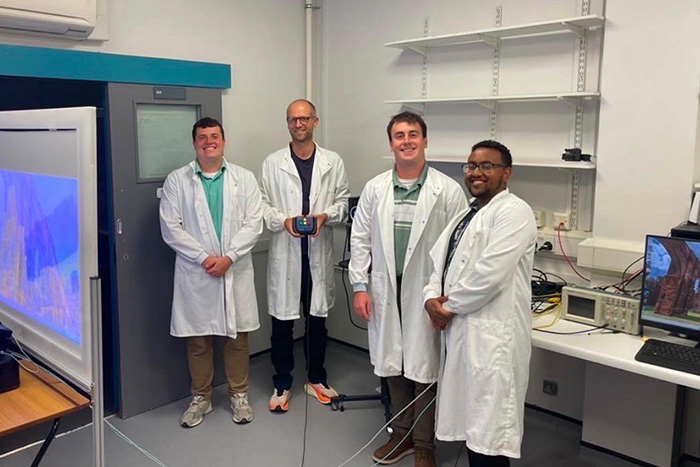
Tyler '29 (left) and Matthew Ferenz '28 (second from right) both interned at University College London Institute of Ophthalmology.
How did you obtain this internship?
I found the University College London Institute of Ophthalmology while searching for vision science research opportunities. I read through my mentor’s published work, became very interested in his photoreceptor research and reached out to him directly. I asked if he offered research opportunities for undergraduate students, explained my background and interests and from there we arranged the internship/research.
Briefly describe what you do for the internship on a day-to-day basis.
I run silent substitution experiments that measure how individual photoreceptors respond to controlled visual stimuli. I set up the equipment, calibrate the stimulus parameters and guide participants through a forced-choice test where a brief dot appears on either the left or right side of a fixation point. The participant reports which side it appeared on, and the software automatically adjusts the stimulus difficulty after each correct response, making the dot progressively harder to detect until the participant reaches the threshold for that photoreceptor. I collect data for rods, L cones, M cones and S cones in both central and peripheral vision across multiple temporal frequencies. After testing, I analyze the results, generate sensitivity curves, normalize the data and compare our findings to previously published scientific papers to understand how our results align with known photoreceptor behavior and broader retinal research.
How has this internship better prepared you to excel at Dickinson and beyond?
This internship has strengthened my critical thinking, data-analysis skills and ability to interpret scientific results. Working in a research lab has also improved my teamwork, communication and collaboration. Overall, it has made me more confident in handling complex experiments and better prepared for advanced coursework and future research.
Have you had other internship experiences previously, and do you plan/hope to intern again in the future?
Yes, I previously interned as an optometric technician at Fab Eye Care, where I gained hands-on clinical experience. Since my long-term goal is optometry, I'm interested in both clinical eye-care positions and research roles that build my skills in vision science. I definitely plan to intern again, especially in opportunities that involve clinical work or research related to photoreceptors, retinal health or visual neuroscience.
What advice would you offer to peers considering an internship?
I would tell peers to reach out even if a lab or clinic is not advertising any openings. If you find someone whose work interests you, email them, introduce yourself and ask if they offer opportunities for students. A lot of research and clinical experiences start simply because you take the initiative to ask.
Beyond your internship, what is one aspect of your Dickinson experience that has made the biggest impact on your personal, academic or professional growth?
One part of my Dickinson experience that has had a big impact on me is the way my science classes and labs push me to learn independently. Having to figure things out, ask questions and work through problems on my own has made me more confident in research and better prepared for real lab work.
Tyler Ferenz '29
Majors: biochemistry & molecular biology and biology
Internship Site: University College London Institute of Ophthalmology
How did you obtain this internship?
I obtained this internship by searching for research opportunities related to vision science. While looking for summer research experiences, I came across the University College London Institute of Ophthalmology and learned about the work of Dr. Matteo Rizzi. I reached out to him by email to ask if there were any opportunities available for undergraduate students during the summer. After discussing my interests and background, Dr. Rizzi welcomed me into his research group and provided me with the opportunity to contribute to a vision science research project at UCL.
Briefly describe what you do for the internship on a day-to-day basis.
On a typical day, I work on a vision science research project focused on understanding the function of different retinal photoreceptors. I run experiments using a method called silent substitution, where visual stimuli are designed to selectively target specific photoreceptors, including rods and the L-, M- and S-cones. I collect contrast threshold data by working with participants as they complete visual detection tasks and then analyze the results to better understand patterns in photoreceptor sensitivity. In addition to experimental work, I spend time reviewing scientific literature, organizing and interpreting data and meeting with members of the research group to discuss progress, challenges and next steps.
How has this internship better prepared you to excel at Dickinson and beyond?
This internship has strengthened my research, analytical and problem-solving skills while giving me hands-on experience applying concepts from biology. It has also taught me that research does not always work on the first attempt and that being patient and willing to try again is important. These skills will help me approach my coursework at Dickinson with greater confidence and prepare me for a future career in vision science or optometry.
What advice would you offer to peers considering an internship?
I would encourage students to take advantage of opportunities, even if they are outside of their comfort zone. An internship is a great way to gain experience, learn from professionals and discover what you are genuinely interested in. I would also recommend asking questions and being willing to make mistakes. Some of the most valuable lessons come from learning how to solve problems when things do not go as planned.
Beyond your internship, what is one aspect of your Dickinson experience that has made the biggest impact on your personal, academic or professional growth?
One aspect of my Dickinson experience that has had the biggest impact on my overall growth is being part of the swimming team. The team is very supportive of one another and encourages everyone to strive for success both in and out of the pool. Being surrounded by teammates who care about each other’s academic and athletic development has motivated me to work harder and become more disciplined. It has also taught me the importance of supporting others and working together toward our individual and team goals.
Anand Dickson '27
Majors: biochemistry & molecular biology
Internship Site: Rothamsted Research
How did you obtain this internship?
As a part of Dickinson’s study-abroad program in England, students had the opportunity to attend the annual Dickinson in London alumni event at the London Royal Automobile Club. During the event I was introduced to my current supervisor, who I later followed up with about the potential of working in their lab. This internship was supported through Dickinson’s Summer Internship Grant.
Briefly describe what you do for the internship on a day-to-day basis.
At Rothamsted, I contribute to ongoing research aimed at what makes weeds so hard to eliminate. I use wet lab, analytical and glasshouse techniques to explore phenotype-to-genotype hypotheses in Alopecurus, the most problematic weed impacting Western European wheat yields.
How has this internship better prepared you to excel at Dickinson and beyond?
This internship in the field of molecular genetics has given me greater confidence as a developing professional. It provided me with a strong base in scientific collaboration as well as project design and execution which will help me in my future endeavors as a student or researcher.
Have you had other internship experiences previously, and do you plan/hope to intern again in the future?
Yes, I previously completed a project at Widener University (Pennsylvania), having the opportunity to work with a mentor in a fruit fly molecular biology lab. I learned technical skills there that I was able to bring to Rothamsted, giving me the chance to expand in a new direction.
What advice would you offer to peers considering an internship?
Completion of an internship is worth your time. An intern will be presented with challenges and learning experiences that cannot be found in academics. An otherwise well-rounded and prepared student will find themselves making mistakes all the time when put into a practical setting; however, you will leave your internship having learned a lesson for every one of those setbacks.
Beyond your internship, what is one aspect of your Dickinson experience that has made the biggest impact on your personal, academic or professional growth?
Throughout my Dickinson experience I have been challenged numerous times to engage with the unfamiliar. Whether that be a class in a new department, or learning a new protocol at my internship site, I have been able to prove to myself that I can find a way forward. Having those experiences, I now approach change with the confidence that I can adapt.
Kristin Houston '27
Majors: biology and health studies certificate
Internship Site: University of Maryland School of Dentistry and Shock Trauma Center
How did you obtain this internship?
I discovered this internship through the Pre-Health Society newsletter, which has always been a wonderful resource for finding opportunities to gain knowledge and experience in healthcare. I felt that this internship was fully aligned with my interests and would be the perfect opportunity for me to gain shadowing experience, so I completed an application process on Handshake.
Briefly describe what you did for the internship on a day-to-day basis.
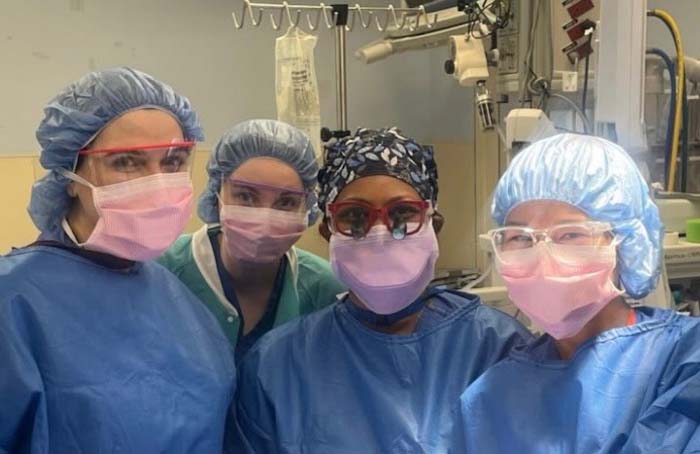
I shadowed many dentists in a variety of specialties, both within the School of Dentistry and in the Medical Center. Each day gave me the opportunity to observe anything, whether it be a consultation with a patient in a clinical setting or a complex, hours-long procedure in the OR. I was also able to attend cases at oral surgery and orthodontics clinics outside of the city of Baltimore, which allowed me to gain valuable shadowing experience in private practices as well.
How has this internship better prepared you to excel at Dickinson and beyond?
The experience truly gave me an insider view of dental school and taught me how to prepare for my journey down this path. Each day of shadowing gave me the chance to talk to current dental students, residents and staff, which allowed me to ask them for advice on the application process, what to expect in classes and the clinic and how I can best use my remaining time at Dickinson to improve my skills.
Have you had other internship experiences previously, and do you plan/hope to intern again in the future?
I completed an internship at Behl Orthodontics in Virginia Beach during the summer of 2024, and in 2025 I was a summer intern at the Alliance for Aquatic Resource Monitoring (ALLARM) on campus.
What advice would you offer to peers considering an internship?
My advice would be to try and make as many connections as possible during your internship. Start conversations, no matter how small, and just get to know the people around you. Even when you least expect it, a seemingly one-time interaction may turn into a lasting friendship or mentorship that can add so much to your experience.
Beyond your internship, what is one aspect of your Dickinson experience that has made the biggest impact on your personal, academic or professional growth?
I would say that my time at ALLARM has had the greatest impact on my personal and academic growth. Because of my experience as a student watershed coordinator, I have gained the technical skills and laboratory experience I need to excel as a biology major, as well as the communication, organization and leadership skills I need to succeed academically and professionally.
Adacus Greene '27
Majors: computer science and mathematics
Internship Site: DNU Lab
How did you obtain this internship?
Met with Professor MacCormick to ask if I could work in the DNU Lab this summer as an intern, and he agreed.
Briefly describe what you did for the internship on a day-to-day basis.
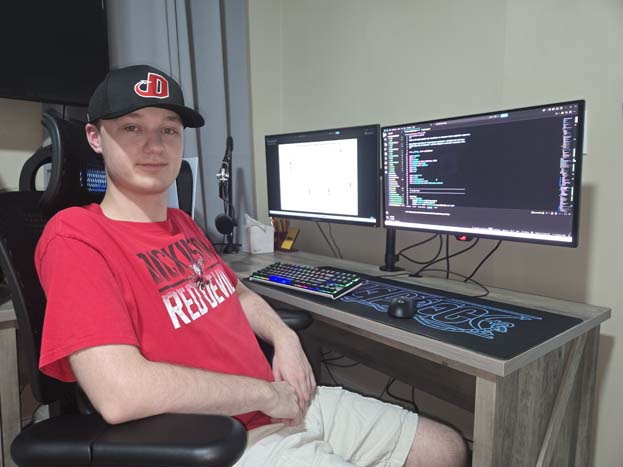
Every Tuesday, I would meet with Professor MacCormick to figure out what I should work on during that week. Then, I would spend three to four hours each day working on that project. The main project I did was learning about different types of tokenization, which involved me training models and recording the effort needed to train them.
How has this internship better prepared you to excel at Dickinson and beyond?
This internship has helped me immensely, as it has allowed me to apply my Dickinson education into the field. I was able to write a lot of code, while also writing documentation using skills I picked up in history classes, which would have never happened if I did not have a liberal arts education.
What advice would you offer to peers considering an internship?
My main advice is to try and take away as much as you can from the internship. While a lot of people just think of internships as a way to put experience on their resume, it is also important to grow and learn from mistakes that you make during this time.
Beyond your internship, what is one aspect of your Dickinson experience that has made the biggest impact on your personal, academic or professional growth?
I think the liberal-arts education has been very helpful, as classes that I would have never taken elsewhere like art history has given me a new perspective on some of the work I do, and I think that having a wide range of education helps me focus better on being a good software engineer or researcher.
TAKE THE NEXT STEPS
Published September 25, 2026