Anthropology is a contemporary social science that bridges both the natural sciences and humanities in order to examine human diversity in the past and present and the profoundly different ways in which social groups interpret and inhabit an increasingly complex world. Our program is characterized by an emphasis on fieldwork, built into the department's methods courses and is encouraged in student work abroad. We cover anthropology's subfields of cultural anthropology, biological anthropology and archaeology, each characterized by unique approaches, yet all oriented toward understanding and informing contemporary debates about the diversity of human experience in a wide range of societies.
The human world consists of a myriad of ethnic, religious and political groupings whose boundaries and identities are increasingly called into question in this age of internationalization. Anthropology takes human diversity, past and present, as a starting point, examining the profoundly different ways in which social groups interpret and inhabit a changing world.
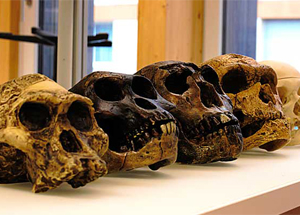
Anthropology at Dickinson College is a broad social science program that connects with the natural sciences and humanities. Faculty in our department engage in teaching and research that inform contemporary debates about globalization and global change in a wide range of societies from China to Tanzania, Ethiopia and Cameroon, Mexico and Guatemala, Peru and Chile, the United States, Italy and other parts of Europe. We also examine the evolution of the human family from our primate origins to our emergence as modern humans. Using anatomical and archaeological fossil records, our goal is to understand our species' biological diversity and unique place in the natural world. By examining the diversity of human experience, students learn to look clearly at their own views and to better understand their own societies. Students probe such questions as: how and why does American society classify people on the basis of race? How does racism work in different parts of the world? How do African and Chinese diasporic populations create social identities in different places? Do women occupy a status lower than men in all societies? Is inequality natural to human societies and universal? How does the penetration of capitalism effect societies throughout the world? In other words, we teach students to think critically, reassessing what they stand for as they explore the human condition from a variety of distinct perspectives.
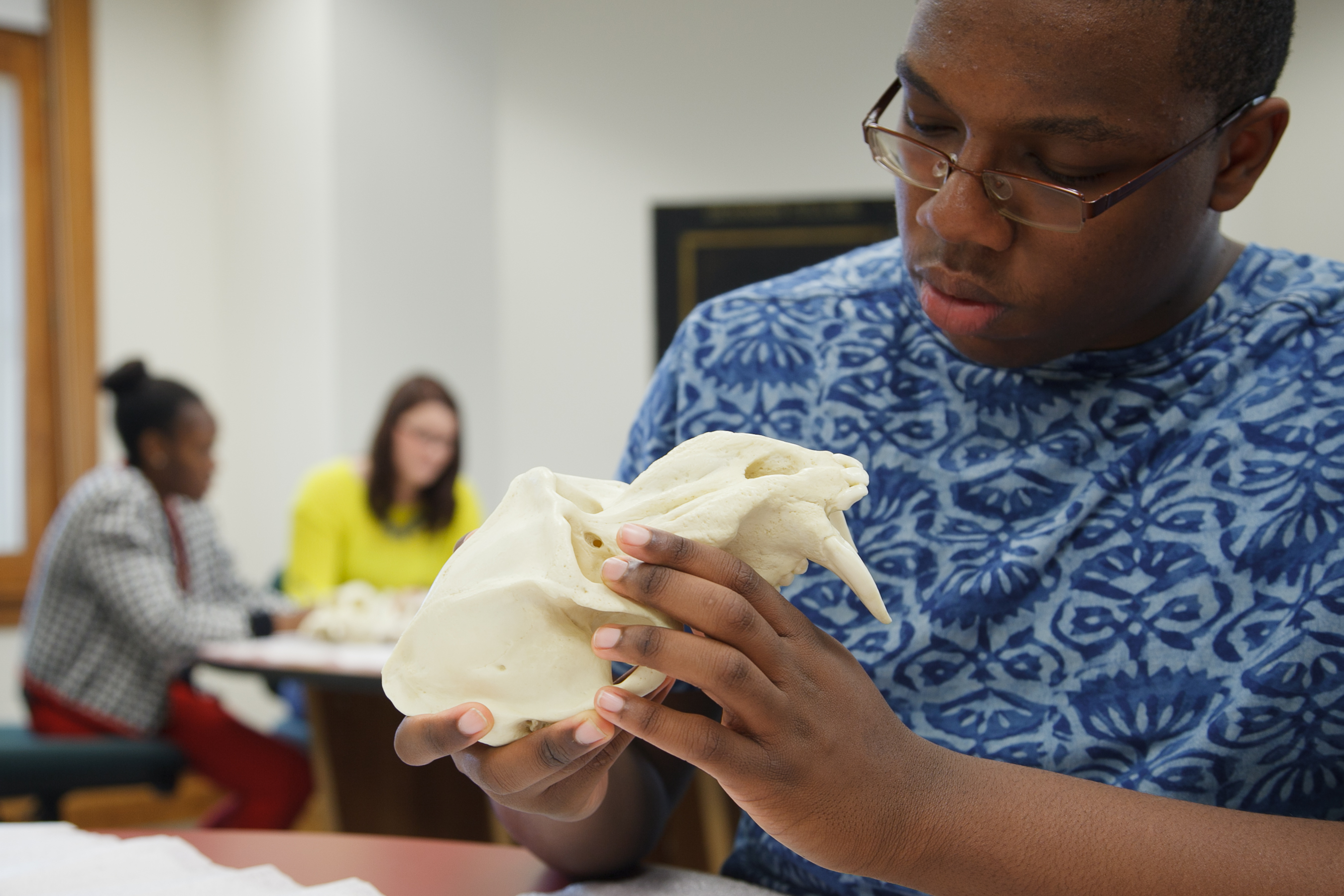
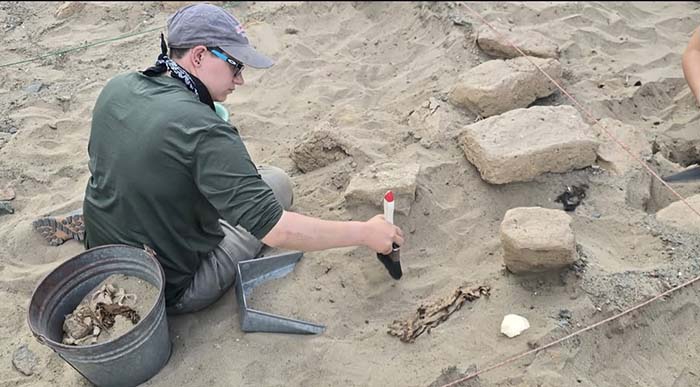
In addition to grappling with social issues, students learn the process of doing anthropological research through fieldwork and laboratory research. Ethnographic fieldwork -- observing and interacting intimately with people in a social setting over an extended period of time -- is one of anthropology's distinctive contributions to the human sciences. In coursework and our department's ethnographic field schools, students familiarize themselves with fieldwork by conducting local and international projects that they may later develop into senior thesis papers. In addition to fieldwork experiences, the Anthropology Department at Dickinson has a state-of-the-art laboratory where students engage in experiential learning about human evolution, osteology, and biological diversity. The lab is also a facility where students can develop their use of qualitative and quantitative research methods. Students are strongly encouraged to take advantage of Dickinson's many study abroad programs, where they can practice their fieldwork skills for senior papers and presentation at conferences.
Anthropology at Dickinson emphasizes the use of knowledge for active participation in the world. Students leave the anthropology program fully prepared for graduate school, for public and non-profit sector work, and for any form of business or professional work that requires critical thinking skills and understanding of cultural differences. Whatever they do in life, students of anthropology will have gained a firm foundation to stand on as they navigate their way through our own society as well as the global society.
News and Events