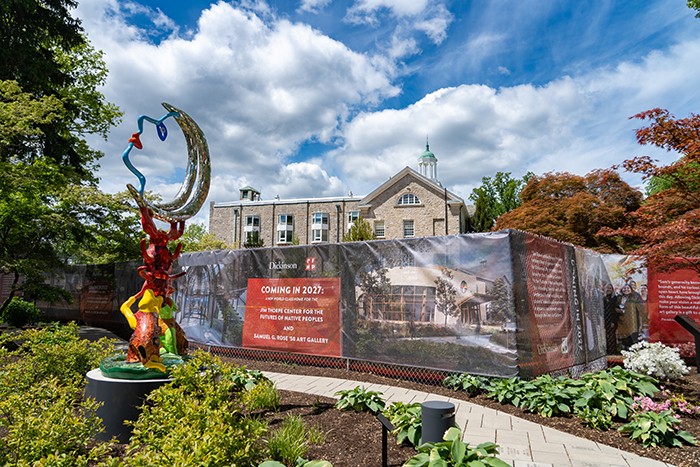
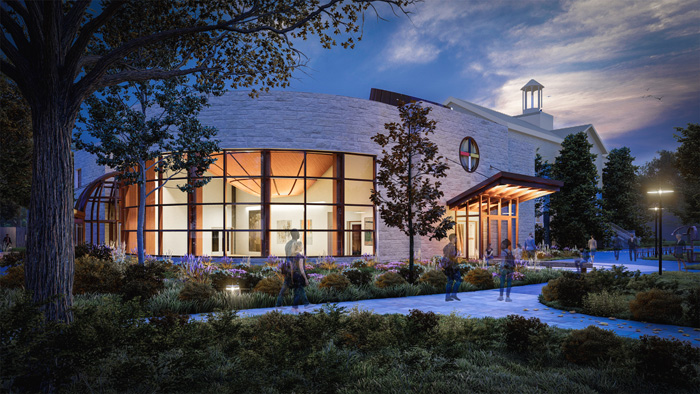
The mission of the Jim Thorpe Center for the Futures of Native Peoples (CFNP) is to advance truth-telling, scholarship, and public engagement that honor Indigenous living histories, affirm Indigenous sovereignty, and support Indigenous futures.
The Center believes that understanding the boarding school era is inseparable from responsibility to Indigenous communities today. The Jim Thorpe CFNP works to ensure that education about the past informs ethical action in the present and sustained investment in the future.
________
“You, your existence…the reason why your heart is pumping all that beautiful blood and oxygen in and out of your body is because you were the chosen one. You were chosen. You were chosen to carry it forward. It was written even before you were born, my dear. How beautiful is that? You have every ounce of determination, resilience, strength, love, fierceness. It’s divine.”
- Dr. Joannie M. Suina (Cochiti Pueblo), CFNP Advisory Board Member
The Jim Thorpe Center for the Futures of Native Peoples (CFNP) at Dickinson College is a nationally significant initiative dedicated to advancing truthful public understanding of Indigenous living histories while actively supporting Indigenous futures. The Center brings together scholarship, education, public humanities, and ethical engagement to address one of the most consequential and least understood chapters in American history: the federal Indian boarding school era and its enduring legacy. Through its programs, partnerships, and public presence, the Jim Thorpe CFNP serves as a national model for how institutions of higher education can move beyond symbolic gestures toward meaningful, sustained responsibility.
In November 2025, with permission from the Thorpe Family Estate, the Center was newly named the Jim Thorpe Center for the Futures of Native Pepples, honoring Jim Thorpe's (Wa-tho-huk) legacy of reciprocity, community engagement, and kindness. Established in 2023 by Dr. Darren Lone Fight, the Center began with the generous support of a three-year foundational grant from the Andrew W. Mellon Foundation. Since May 2024, Dr. Amanda Royce Josanaraae Cheromiah serves as the Executive Director. She is the granddaughter of six Carlisle Indian Industrial School students.
The Jim Thorpe CFNP occupies a unique position of responsibility and leadership due to Dickinson College’s complicated historical relationship with Carlisle Indian Industrial School, the first federally operated off-reservation boarding school in the United States. From 1879 to 1918, nearly 7,800 Indigenous children and young adults from Tribal Nations across the continental United States, Alaska, and Puerto Rico went to Carlisle as part of a federal project aimed at assimilation and cultural eradication. Indigenous children and youth came to Carlisle through a range of circumstances shaped by force, coercion, and unequal power. Some arrived as prisoners of war, some were taken from their families, some were sent by caretakers navigating limited and constrained choices, and a small number were enrolled through tuition. The Jim Thorpe CFNP is located about a mile from the former grounds of the Carlisle Indian Industrial School.
Carlisle was not an isolated institution. It became the model for a vast system of boarding schools across the United States and Canada, shaping federal policy and profoundly affecting Indigenous families and communities across generations. Dickinson College’s historical involvement with Carlisle, including institutional support and collaboration, represents a profound moral failure that cannot be addressed through acknowledgment alone.
This relationship included Dickinson College faculty and ministers associated with the school who taught and held services at Carlisle Indian Industrial School.
Dickinson also conferred honorary degrees on Carlisle superintendents: Richard Henry Pratt received an honorary Doctor of Laws degree in 1898, and Moses Friedman received an honorary Master of Arts degree in 1911.
The Indigenous Revolt: Carlisle, PA & Beyond explores the enduring legacy of the Carlisle Indian Industrial School and celebrates the thriving futures of Native Peoples. Through powerful stories from Indigenous knowledge keepers, descendants of boarding school students, and non-Indigenous allies, this podcast honors the past while focusing on cultural resilience, healing, and the future we're building together. Join us through a journey of reclaiming, revitalizing, and imagining Indigenous futures.
Stream on Youtube, Spotify, Apple Podcasts, Amazon Music, and iHeart Radio!
Host by Dr. Amanda Royce Josanaraae Cheromiah (Laguna Pueblo), Granddaughter of Carlisle Indian Industrial School students, and Executive Director, CFNP.
Supporting the Center for the Futures of Native Peoples (CFNP) is an opportunity to invest in education with integrity, leadership with accountability, and impact that endures beyond a single generation. At a moment when institutions across the country are being asked not only to acknowledge history but to act responsibly in the present, CFNP stands as a nationally significant model for how higher education can engage truthfully, ethically, and constructively with Indigenous living histories and futures. Your philanthropic support helps ensure that this work is not symbolic, episodic, or short-lived, but sustained, rigorous, and future-shaping.
A contribution to the CFNP supports a center that:
Philanthropic investment allows CFNP to expand its reach, deepen its scholarship, and strengthen partnerships with Indigenous communities, scholars, and institutions. It enables the Center to serve not only as a site of learning, but as a national reference point for ethical engagement, public humanities, and Indigenous futures.
For donors who care about legacy, justice, education, and responsible leadership, the CFNP offers a meaningful and lasting opportunity to make an impact, one that shapes how history is understood and how futures are imagined.
HOW TO GIVE
Visit here. Click on "Make a Gift" red box. Fill out your donation information. Under "Designation" type "Center for the Futures of Native Peoples." Select the CFNP from the dropdown menu.
We are deeply grateful for your support!
Keep up-to-date with the CFNP by signing up to our mailing list or following our Instagram.