Faculty Profile
Christopher Peacock
Assistant Professor of East Asian Studies (2022)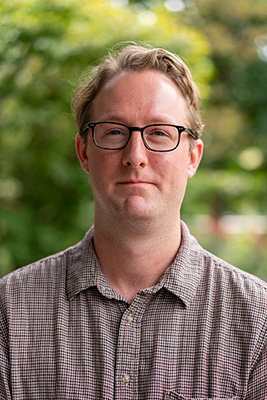
Contact Information
Stern Center for Global Education Stern Center for Global Education 001
717-245-1038
Bio
Professor Peacock specializes in literature and culture in modern China, with a particular focus on Tibet. He received his Ph.D. in East Asian Languages and Cultures from Columbia University in 2020. In his recent research, he has examined the interactions between Chinese and Tibetan intellectual traditions in the 20th and 21st centuries, considering how concepts of national identity have taken shape in Tibetan literature in the PRC. Professor Peacock is also a translator, and his translations of fiction and poetry have appeared in a range of journals and literary magazines. His book-length publications include Tsering Döndrup’s The Handsome Monk and Other Stories (Columbia University Press, 2019) and Tsering Yangkyi’s Flowers of Lhasa (Balestier Press, 2022), the first novel by a Tibetan woman writer translated into English, for which he received a PEN Translates award. In addition to Chinese language classes of all levels, he teaches courses on modern Chinese and Tibetan literatures.
Education
- B.A., University of London, 2008
- M.A., 2010: Ph.D., Columbia University, 2020
2026-2027 Academic Year
Fall 2026
CHIN 101 Elementary Chinese
A study of the fundamentals of Mandarin Chinese, including grammar, reading, and writing using both traditional and simplified characters, pinyin romanization, pronunciation, and conversational skills.
CHIN 231 Advanced Chinese
Advanced reading, writing, speaking, and understanding of the Chinese language for students who have completed Chinese 202. This course aims to enhance the students' understanding of Chinese culture and introduce them to issues in contemporary China through reading and discussion.
Prerequisite: 202 or the equivalent
CHIN 360 Texts Ancient and Modern
The goals of this course are fourfold: 1) to further develop advanced proficiency in reading, writing, and speaking Mandarin Chinese, 2) to gain exposure to some major texts and writers from the Chinese canon, both classical and modern 3) to develop basic research skills in Chinese, and 4) to apply your language skills to projects that reflect your own interests. The course is centered around prominent literary and historical texts, as well as some contemporary sources such as news articles. The focus of the class sessions will be on in-class reading, oral discussion of the texts in Chinese, and translation in order to facilitate comprehension.
Spring 2027
CHIN 102 Elementary Chinese
A study of the fundamentals of Mandarin Chinese, including grammar, reading, and writing using both traditional and simplified characters, pinyin romanization, pronunciation, and conversational skills.Prerequisite: 101 or the equivalent
EASN 203 Chinese Literature After Mao
China has undergone vast changes since the death of Mao Zedong in 1976, transitioning rapidly from a socialist society governed by mass political campaigns to the economic superpower we see today. Since the start of this "New Era," Chinese literature has both reflected and reflected upon these changes. Writers played a central role in the intellectual debates of the 1980s that culminated in the protests at Tiananmen Square, and they have cast critical lenses on China's meteoric growth and the consumer society, futuristic mega-cities, and steep rural-urban inequalities that it has produced. But as Chinese writers looked forward, they have also looked back, attempting to reckon with the legacy of Mao's rule. This course will be split into two parts: the first will examine how Chinese writers have processed and critiqued the upheavals and tragedies of the Mao era, notably the Great Leap Forward and the Cultural Revolution. The second will consider recent developments in Chinese literature and what they tell us about contemporary Chinese society. We will study modern Chinese literature in its many forms (fiction, poetry, drama, film) and encounter the works of major writers (including Nobel Prize winners Gao Xingjian and Mo Yan). Through these texts, we will both appreciate the creative contributions Chinese writers are making to world literature and gain critical insights into the sweeping transformations China has experienced over the last decades. All texts in English translation; no prior study of Chinese language or China-related topics required.
EASN 205 Chinese Fict & Film after Mao
Cross-listed with FMST 210-07. China has undergone vast changes since the death of Chairman Mao in 1976, transitioning rapidly from a socialist society governed by mass political campaigns to the economic superpower we see today. Since the start of this “New Era,” Chinese writers and filmmakers have wrestled with the rapid changes in their society while also looking backwards, attempting to reckon with the legacy of Mao’s rule. This course will be split into two parts: the first will examine how Chinese fiction and film has processed and critiqued the tragedies of the Mao era, notably the Great Leap Forward and the Cultural Revolution. The second will consider recent developments in literature and film and what they tell us about contemporary Chinese society. By studying these sources, we will appreciate the creative contributions Chinese artists are making to global culture, and also gain critical insights into the sweeping transformations China has experienced over the last decades. All texts in English translation; no prior study of Chinese language or China-related topics required.
FMST 210 Chinese Fict & Film after Mao
Cross-listed with EASN 205-02. China has undergone vast changes since the death of Chairman Mao in 1976, transitioning rapidly from a socialist society governed by mass political campaigns to the economic superpower we see today. Since the start of this “New Era,” Chinese writers and filmmakers have wrestled with the rapid changes in their society while also looking backwards, attempting to reckon with the legacy of Mao’s rule. This course will be split into two parts: the first will examine how Chinese fiction and film has processed and critiqued the tragedies of the Mao era, notably the Great Leap Forward and the Cultural Revolution. The second will consider recent developments in literature and film and what they tell us about contemporary Chinese society. By studying these sources, we will appreciate the creative contributions Chinese artists are making to global culture, and also gain critical insights into the sweeping transformations China has experienced over the last decades. All texts in English translation; no prior study of Chinese language or China-related topics required.