Faculty Profile

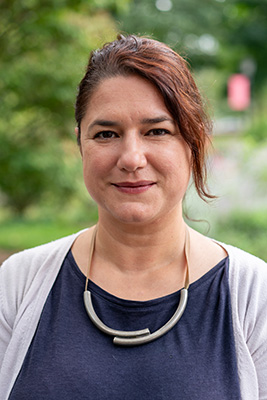
Sara Galli

Visiting International Lecturer (2023)
Contact Information

gallis@dickinson.edu

Bosler Hall
717-254-8120

2025-2026 Academic Year

Fall 2025

ITAL 101 Elementary Italian
Intensive study of the fundamentals of Italian grammar, with a view to developing reading, writing, speaking, and understanding skills. Laboratory and other audiovisual techniques are used. Cultural elements are stressed as a context for the assimilation of the language.

ITAL 102 Elementary Italian
Intensive study of the fundamentals of Italian grammar, with a view to developing reading, writing, speaking, and understanding skills. Laboratory and other audiovisual techniques are used. Cultural elements are stressed as a context for the assimilation of the language.Prerequisite: 101 or the equivalent

ITAL 201 Intermediate Italian
Intensive introduction to conversation and composition, with special attention to grammar review and refinement. Essays, fiction and theater, as well as Italian television and films, provide opportunities to improve familiarity with contemporary Italian language and civilization. Prerequisite: 102 or the equivalent. This course fulfills the language graduation requirement.

Spring 2026

ITAL 102 Elementary Italian
Intensive study of the fundamentals of Italian grammar, with a view to developing reading, writing, speaking, and understanding skills. Laboratory and other audiovisual techniques are used. Cultural elements are stressed as a context for the assimilation of the language.Prerequisite: 101 or the equivalent

WGSS 301 Fascism and Film
Cross-listed with FMST 310-01 and ITAL 323-01. Taught in English. In this course, we will explore the narratives of fascism in cinema from the 1920s onwards. The infamous slogan "cinema is the most powerful weapon" was coined by fascist dictator Mussolini who understood how the media could create consensus and control. We will begin our analysis from the Italian cinema produced before and during fascism by directors Camerini, Gallone, and Brignone: their cinema revolves around a fantasy of masculinity associated with racial and ethnic superiority, in contrast to the feminine sphere of reproduction, pliability, and madness. We will then examine the shift to selective memories of victimization and rejection in postwar antifascist films by directors such as Bertolucci, De Sica, Wertmuller, Fellini, Cavani, Taviani, and Spielberg. These films characterize fascism through symbols of violence, immorality, and instability: from the policing of national and sexual boundaries to man-to-man bonding and the fear of homosexuality, and images of Nazi and fascist eroticism. Finally, through the analysis of works by directors such as Scola, Benigni, Bellocchio, and Tarantino, we will explore how cinema continues to intercept the cultural configurations that fascism has constructed of itself, the system(s) of power it has created, and the ur-fascist myths still present in western societies. The FLIC session in Italian (Wednesday, 11:30 - 12:30pm) is offered for Italian minors/majors, INBM majors, and INST majors who have completed ITAL 231 or equivalent.

FMST 310 Fascism and Film
Cross-listed with ITAL 323-01 and WGSS 301-03. Taught in English. In this course, we will explore the narratives of fascism in cinema from the 1920s onwards. The infamous slogan "cinema is the most powerful weapon" was coined by fascist dictator Mussolini who understood how the media could create consensus and control. We will begin our analysis from the Italian cinema produced before and during fascism by directors Camerini, Gallone, and Brignone: their cinema revolves around a fantasy of masculinity associated with racial and ethnic superiority, in contrast to the feminine sphere of reproduction, pliability, and madness. We will then examine the shift to selective memories of victimization and rejection in postwar antifascist films by directors such as Bertolucci, De Sica, Wertmuller, Fellini, Cavani, Taviani, and Spielberg. These films characterize fascism through symbols of violence, immorality, and instability: from the policing of national and sexual boundaries to man-to-man bonding and the fear of homosexuality, and images of Nazi and fascist eroticism. Finally, through the analysis of works by directors such as Scola, Benigni, Bellocchio, and Tarantino, we will explore how cinema continues to intercept the cultural configurations that fascism has constructed of itself, the system(s) of power it has created, and the ur-fascist myths still present in western societies. The FLIC session in Italian (Wednesday, 11:30 - 12:30pm) is offered for Italian minors/majors, INBM majors, and INST majors who have completed ITAL 231 or equivalent. Additional time slot: FLIC Italian sessions will be held from 11:30am - 12:30pm on Wednesdays for ITAL/INBM/INST students.

ITAL 323 Fascism and Film
Cross-listed with FMST 310-01 and WGSS 301-03. Taught in English. In this course, we will explore the narratives of fascism in cinema from the 1920s onwards. The infamous slogan "cinema is the most powerful weapon" was coined by fascist dictator Mussolini who understood how the media could create consensus and control. We will begin our analysis from the Italian cinema produced before and during fascism by directors Camerini, Gallone, and Brignone: their cinema revolves around a fantasy of masculinity associated with racial and ethnic superiority, in contrast to the feminine sphere of reproduction, pliability, and madness. We will then examine the shift to selective memories of victimization and rejection in postwar antifascist films by directors such as Bertolucci, De Sica, Wertmuller, Fellini, Cavani, Taviani, and Spielberg. These films characterize fascism through symbols of violence, immorality, and instability: from the policing of national and sexual boundaries to man-to-man bonding and the fear of homosexuality, and images of Nazi and fascist eroticism. Finally, through the analysis of works by directors such as Scola, Benigni, Bellocchio, and Tarantino, we will explore how cinema continues to intercept the cultural configurations that fascism has constructed of itself, the system(s) of power it has created, and the ur-fascist myths still present in western societies. The FLIC session in Italian (Wednesday, 11:30 - 12:30pm) is offered for Italian minors/majors, INBM majors, and INST majors who have completed ITAL 231 or equivalent.