Faculty Profile
Gene Wingert
Adjunct Instructor in Biology (2001)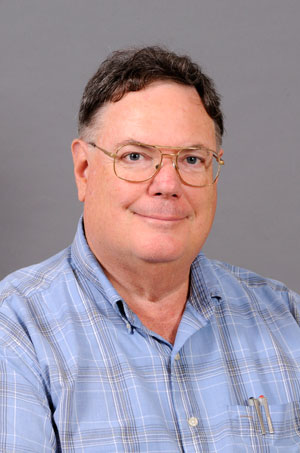
Contact Information
B.A., Shippensburg State College, 1967; M.Ed., 1972.
Rector North
717-254-8939
2026-2027 Academic Year
Fall 2026
BIOL 131 Intro to Org, Pop & Ecosyst
During the past fifty years, people have become nearly isolated from their natural environment. Fewer farms, urbanization, the expansion of suburbs, air conditioning, mall shopping, posted land, less access to waterways, forgotten victory gardens and a host of other societal changes as created a generation that is suffering from Nature Deficient Disorder. Even the science of Biology has become more concentrated in the cellular and molecular realm than the field sciences. This course will explore the realm of field biology and natural history in the Carlisle area and familiarize students with some of the common forms of life outside the classroom. Being familiar with the organisms that compose ecosystems enables a student to have a better understanding of the principals of ecology. Sustaining our wildlife in the face of climate change, development, energy resource extraction, pesticides and various “gender bender” compounds will also be a focus of this course.
BIOL 412 Research in Wildlife Ecology
Research in Wildlife Ecology is a project-based course designed for Biology majors. During this course each student will complete research original to the student. This research will be presented in a formal paper and in poster form. The poster will be displayed at the Biology Symposium or a professional meeting. The research will most likely be field oriented.
ENST 550 Independent Research
Spring 2027
BIOL 301 Wildlife Ecology
Wildlife Ecology is designed for majors in both Environmental Science and Biology. This course approaches ecology from the aspect of focusing on individual organisms and the role they play in their environment. Students will visit various habitats in Pennsylvania and view wildlife first hand. The texts are both place based focusing on Northeastern forests and Northeastern vernal ponds. These two ecosystems are intimately linked and the health of one influences the other. Students will have hands on labs with living organisms and investigate the roles each of these organisms play in the forest and vernal pool environment. A focus of the course will be how we must manage these ecosystems if they are to be enjoyed by our grandchildren. Both of these ecosystems are being changed by human ignorance and global climate change. We are at a "squeak point" in our ability to sustain these ecosystems. Only a complete understanding of their ecology and rapid action will sustain them for future generations.