Faculty Profile
Kristine Mitchell
Associate Professor of Political Science and International Studies (2006)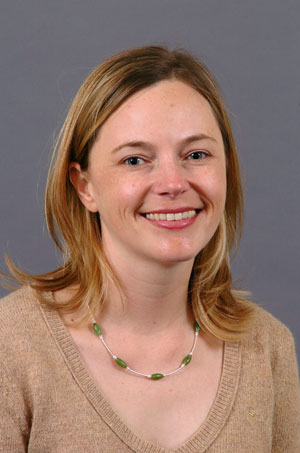
Contact Information
Denny Hall Denny Hall 20
717-245-1220
Bio
Kristine Mitchell's teaching and research interests include European politics, with a particular focus on migration to, and within, Europe; the European Union; political identities; and labor politics. She has conducted field research across Western Europe and has enjoyed research affiliations with numerous French, British, and American universities.
Education
- B.A., Oberlin College, 1997
- M.A., Princeton University, 2003
- Ph.D., 2006
2026-2027 Academic Year
Fall 2026
FYSM 100 First-Year Seminar
The First-Year Seminar (FYS) introduces students to Dickinson as a "community of inquiry" by developing habits of mind essential to liberal learning. Through the study of a compelling issue or broad topic chosen by their faculty member, students will:
- Critically analyze information and ideas
- Examine issues from multiple perspectives
- Discuss, debate and defend ideas, including one's own views, with clarity and reason
- Develop discernment, facility and ethical responsibility in using information, and
- Create clear academic writing
The small group seminar format of this course promotes discussion and interaction among students and their professor. In addition, the professor serves as students' initial academic advisor. This course does not duplicate in content any other course in the curriculum and may not be used to fulfill any other graduation requirement.
INST 170 International Relations
Cross-listed with POSC 170-03.
POSC 170 International Relations
Cross-listed with INST 170-03.
Spring 2027
INST 170 International Relations
Cross-listed with POSC 170-02.
POSC 170 International Relations
Cross-listed with INST 170-02.
POSC 250 Comparative European Politics
While Europe is home to many of the world’s oldest democracies and most generous social welfare systems, the political stability of European countries in the 21st century can hardly be taken for granted. Political polarization and fragmentation, radical populism, and structural challenges to established social systems pose thorny challenges for countries across the region. While highlighting dynamics common to many countries, this comparative course also familiarizes students with the region’s political diversity, highlighting the variety of national paths to democracy and variation of political structures and political cultures from country to country.