Faculty Profile
Sarah McGaughey
Professor of German (2007)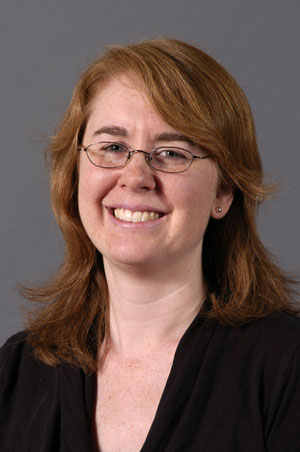
Contact Information
Bosler Hall Bosler Hall 114
717-245-1279
Bio
McGaughey is a scholar of modernist studies, in particular of the region of German-speaking Central Europe and of the interwar period. She focuses on the Viennese author Hermann Broch and the wider cultural and literary context in which he lived and wrote. She is author of "Ornament as Crisis: Architecture, Design, and Modernity in Hermann Broch's 'The Sleepwalkers'" (Northwestern UP, 2016), a co-editor of "A Companion to the Works of Hermann Broch" (Camden House, 2019), and a co-editor of "Massenwahntheorie und Friedenspoetik. Hermann Broch und die bedrohte Demokratie des 20. Jahrhunderts" ("Theory of Mass Hysteria and Poetics of Peace. Hermann Broch and the Threat to Democracy in the 20th Century", De Gruyter, 2023). She is also online editor of the journal for transatlantic German Studies, "Glossen" (blogs.dickinson.edu/glossen). She is Vice President of the International Working Group on Hermann Broch (Internationaler Arbeitskreis Hermann Broch, IAB, iab.dickinson.edu) and works closely with the President, Prof. Dr. Doren Wohlleben (Phillipps-Universität Marburg), to maintain the active global scholarly group. McGaughey teaches at all levels of the German program at Dickinson. She has developed courses on German cultural history of the environment (German Environments), German theater and radio, contemporary German literature, modern architectural history of German-speaking cultures, "Popliteratur", and women's roles in social and political movements. She enjoys teaching German as a second language, reading and teaching contemporary German literature, and listening to and teaching with German-language pop music.
Education
- B.A., Smith College, 1997
- M.A., Washington University-St. Louis, 1999
- Ph.D., 2005
2026-2027 Academic Year
Fall 2026
GRMN 202 Int Grmn II: Mediated Grmn Clt
What was occupied Vienna like in post-WWII Central Europe? How does a film convey fear? Is German academic writing different from how I write papers at Dickinson? Posing these or similar questions, this course builds students’ basic intermediate level of cultural and linguistic skill and explores the challenges of understanding and communicating with various media in colloquial, academic, and professional contexts. As it does so, students will acquire a better understanding of contemporary and historical issues, anxieties, and desires in the German-speaking world. There will be a special focus on writing in different modes, as this is a writing in the discipline (WiD) course. Prerequisite: 201, or permission of the instructor.
GRMN 251 Architect Grmn-Spkng World
What is architectural theory and how did German-speaking Europe contribute to it? How did the Strasbourg Cathedral get built and what did Goethe write about it? What is the history of architectural style in Central Europe? How did architects and city planners respond to the need for more housing at the start of the 20th century? How do we talk about use of built spaces? These are some of the questions we will pose in this course on the history, use, and design of architecture in the German-speaking world. Students will learn both the basics of architectural history and theory in German-language context and develop their German-language skills in the field. Taught in German.
Spring 2027
GRMN 201 Int German I:Contemp Grm Cltr
What did the Brothers Grimm do besides collecting fairy tales? How do narratives inform national identity? Why do Germans return their empty bottles to the store? Students approach such questions, which touch on language, culture, economics, geography, history, and more, through a variety of media in this course. At the same time, students review grammatical structures, expand their knowledge of stylistic forms, and practice various registers of written and spoken German. German 201 aims to develop students’ skills to understand and reflect upon German-language culture at a basic intermediate level. Classes meet four days a week. Prerequisite: 102 or 103, or permission of the instructor. This course fulfills the language graduation requirement.
GRMN 202 Int Grmn II: Mediated Grmn Clt
What was occupied Vienna like in post-WWII Central Europe? How does a film convey fear? Is German academic writing different from how I write papers at Dickinson? Posing these or similar questions, this course builds students’ basic intermediate level of cultural and linguistic skill and explores the challenges of understanding and communicating with various media in colloquial, academic, and professional contexts. As it does so, students will acquire a better understanding of contemporary and historical issues, anxieties, and desires in the German-speaking world. There will be a special focus on writing in different modes, as this is a writing in the discipline (WiD) course. Prerequisite: 201, or permission of the instructor.