Faculty Profile
Toby Reiner
Professor of Political Science (2011)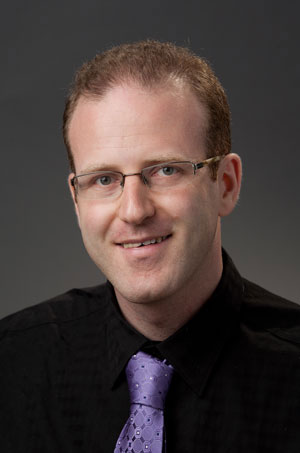
Contact Information
Denny Hall
717-245-1705
Bio
His research and teaching interests are in contemporary Anglo-American political theory, including ethical aspects of world politics, especially the ethics of war and global distributive justice, public policy, including immigration, citizenship, and minority rights, and in political ideologies, especially liberalism and social democracy.
Education
- B.A., University of Manchester, 2000
- M.Phil., University of Cambridge, 2001
- M.A., University of California-Berkeley, 2006
- Ph.D., 2011
Awards
- Ganoe Award for Distinguished Teaching, 2019-20
2026-2027 Academic Year
Fall 2026
POSC 205 American Political Thought
Is there a distinctively American way of thinking about politics? How have American political thinkers drawn on and differentiated themselves from political theory in other parts of the world? This course seeks to answer these questions by considering some of the major thinkers in the USA from its foundation to the present day. We will consider both the dominant liberalism and conservativism of mainstream American thought and radical challenges to it, from abolitionists through socialists and feminists to anarchists, environmentalists, and pacifists, and topics such as civil disobedience, federalism, constitutional interpretation, and republicanism. Defining political thought broadly, the class includes detailed consideration of activist political movements at key moments in the nation’s history, including the New Left in the 1960s, the New Right in the 1970s, and the Occupy movement. We will ask such questions as, “How did the USA maintain slavery so deep into the 19th century?’, “Why has there been no major socialist movement in the USA?” and “What are the sources of American exceptionalism?” Students should find some of their fundamental preconceptions about American political ideas challenged and come away with a deeper understanding of the country’s political culture.
Prerequisite: POSC/PHIL 180.
LWJS 390 War and Justice
Cross-listed with POSC 390-01. Permission of Instructor Required. "All's fair in love and war," goes the common saying, suggesting that standards of justice or morality are inapplicable to military conflict, which is a realm of survival in which anything goes. Others hold that no war can possibly be just, at least in the contemporary era in which weapons of mass destruction mean that wars wreak a human and environmental impact that cannot possibly be sustainable or legitimate. In this class, we consider both these approaches - realism and pacifism, respectively - and juxtapose them to the just-war tradition, which holds that defensive and limited wars may be justified so long as they follow certain moral guidelines such as proportionality and non-combatant immunity. We will consider when it might be just to go to war, how just wars must be waged, and what, if anything, justice after war consists in. We will approach these questions using both the laws of war and philosophical works about war. We will consider military conflicts from across the globe, including the World Wars, Vietnam, Rwanda, Cambodia, the former Yugoslavia, and more, and from ancient Greece through the Middle Ages to the present day. We will consider topics such as humanitarian intervention and the protection of human rights during war, the moral status and responsibility of ordinary combatants, war crimes tribunals, genocide and ethnic cleansing, civil war, emerging technologies of war, and the possibility of moving towards a world in which war is no longer necessary.
POSC 390 War and Justice
Cross-listed with LWJS 390-01. Permission of Instructor Required. "All's fair in love and war," goes the common saying, suggesting that standards of justice or morality are inapplicable to military conflict, which is a realm of survival in which anything goes. Others hold that no war can possibly be just, at least in the contemporary era in which weapons of mass destruction mean that wars wreak a human and environmental impact that cannot possibly be sustainable or legitimate. In this class, we consider both these approaches - realism and pacifism, respectively - and juxtapose them to the just-war tradition, which holds that defensive and limited wars may be justified so long as they follow certain moral guidelines such as proportionality and non-combatant immunity. We will consider when it might be just to go to war, how just wars must be waged, and what, if anything, justice after war consists in. We will approach these questions using both the laws of war and philosophical works about war. We will consider military conflicts from across the globe, including the World Wars, Vietnam, Rwanda, Cambodia, the former Yugoslavia, and more, and from ancient Greece through the Middle Ages to the present day. We will consider topics such as humanitarian intervention and the protection of human rights during war, the moral status and responsibility of ordinary combatants, war crimes tribunals, genocide and ethnic cleansing, civil war, emerging technologies of war, and the possibility of moving towards a world in which war is no longer necessary.
Spring 2027
POSC 290 Comparative Political Thought
What were the central tenets of Gandhi's political theory? Confucius? Mandela? In this class, we will study the emerging field of Comparative Political Theory, exploring political thought outside the Western world, and considering how politics has been though about in East Asia, South Asia, the Middle East and North Africa, Latin America, and sub-Saharan Africa. We will also consider how this thought challenges our conceptions of political philosophy, constitutional law, and human rights, and of politics itself.
POSC 490 Senior Thesis
Permission of Instructor Required.