Faculty Profile
Thomas Arnold
Professor of Biology; Walter E. Beach '56 Chair in Sustainability Studies (2003)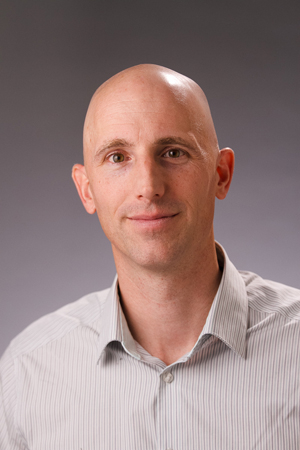
Contact Information
Rector North Rector North 2303
717-245-1319
http://blogs.dickinson.edu/arnoldt/
Bio
Dr. Arnold is a broadly-trained biochemist who studies natural products produced by marine organisms and terrestrial plants exposed to stress, including stress caused by changing climates, grazing, or infection. His research focuses on plant sugar metabolism and transport, polyphenolic metabolism, glucosinolate production, and the occurrence of natural epigenetic regulators which exhibit promising medical properties. He is especially interested in molecules synthesized by organisms living in coral reefs, seagrass meadows, and temperate forests. He has been awarded research grants from the National Science Foundation, the Smithsonian Institution, and NASA. His work has been published in a variety of journals, often with undergraduate co-authors. He has over 20 years of experience as a science educator and mentor of undergraduate researchers. He teaches courses in biochemistry and metabolism, physiology, and ecological physiology as well as climate science. He founded the Dickinson Global Scholar Study Abroad program, and led its first semester-long program in Brisbane, Australia. He has been awarded course innovation grants from the National Science Foundation, among others. Over one hundred students have been trained in his laboratory and through these research programs. Dr. Arnold is an avid SCUBA diver and enjoys spending time near saltwater, in Chesapeake Bay tidal marshes, and on small boats. He is an advocate for Alzheimer's disease research.
Education
- B.A., St. Mary's College of Maryland, 1993
- Ph.D., University of Delaware, 1998
2026-2027 Academic Year
Fall 2026
FYSM 100 First-Year Seminar
The First-Year Seminar (FYS) introduces students to Dickinson as a "community of inquiry" by developing habits of mind essential to liberal learning. Through the study of a compelling issue or broad topic chosen by their faculty member, students will:
- Critically analyze information and ideas
- Examine issues from multiple perspectives
- Discuss, debate and defend ideas, including one's own views, with clarity and reason
- Develop discernment, facility and ethical responsibility in using information, and
- Create clear academic writing
The small group seminar format of this course promotes discussion and interaction among students and their professor. In addition, the professor serves as students' initial academic advisor. This course does not duplicate in content any other course in the curriculum and may not be used to fulfill any other graduation requirement.
BIOL 343 Metabolism
A survey of the metabolic processes in living organisms, including glycolysis, gluconeogenesis, the TCA cycle, oxidative phosphorylation, aerobic and anaerobic respiration, and the synthesis and degradation of other biomolecules. For each metabolic pathway, we will examine the normal regulation of genes and enzymes, the associated signaling cascades, the energetic requirements of cells and tissues, and the functions of pathway end products. We will discuss the response of metabolism to exercise, stress, infection, inflammation, aging, and system degeneration. We will also review metabolic disorders such as cardiovascular disease, diabetes, and various muscular and neurological conditions as well as metabolic malfunctions with a genetic basis, e.g., human inborn errors of metabolism. This course includes weekly discussions of readings from the primary literature.
Three hours classroom a week. Prerequisite: CHEM 242.
Spring 2027
BIOL 131 Intro to Org, Pop & Ecosyst
This introductory course spans levels of biological organization from basic multicellular microanatomy to organismal physiology and ecology, as understood through the lens of evolution. Course content will be focused around a specific theme determined by the instructor, and will include evolutionary principles of variation, selection, competition and cooperation, and how their operation at different levels of organization accounts for form and function of organisms, communities, and ecosystems. We will investigate homeostasis, reproduction and development as physiological processes that take place within organisms, and as ecological processes that interact with the environment and generate diversity of form over evolutionary time. Finally we will take stock of the existing forms and levels of biological organization and ask how their relationships establish the biosphere in which we live. Three hours classroom and three hours laboratory a week. This is one of two courses required of all Biology majors before entering the upper level. It is complementary to BIOL 132 – Introduction to Molecules, Genes, and Cells, and the courses may be taken in either order.